developed opencast coal mines
(La Francia and El Hatillo), three
undeveloped mines, more than
184 million t of reserves and a stake in a
railroad to a coal terminal.
“As the US coal industry continues
to be under attack for elimination by
the Obama Administration, we must
look to international markets to ensure
our survival,” Robert E Murray,
Chairman, President and CEO of
Murray Energy, said. His Executive
Vice President, Chief Operating Officer
and Chief Financial Officer, Robert D
More, added: “acquiring assets in
Colombia will broaden our
international presence in an attractive
market and position ourselves to better
serve our customers around the world.”
Colombia Natural Resources was
previously owned by the
Goldman Sachs and the sale was in line
with the bank’s ‘war on coal’‑inspired
exit from the coal business.
Infrastructure
Is the export slowdown only in response
to the growth in renewable energy in the
export‑destinations for most of
Colombia’s coal?
The OECD has criticised export
infrastructure, but not specifically that
relative to coal. The industry has been
quiet on the subject. In September, the
government okayed the final clause in
the peace deal with the Revolutionary
Armed Forces of Colombia (FARC), the
former guerrilla movement that had
been disrupting railway operations.
In September, a Special Jurisdiction
for Peace was announced and it was
decided that a final agreement should
be signed by 23 March 2016. After
signing, a maximum of 60 days would
be allowed in which FARC must
completely disarm. Analysts comment
that similar statements have been
made and deadlines set before. The
industry‑relevant ongoing issues seem
to centre around FARC’s
dissatisfaction with the share of
government revenues from coal that
are diverted to the regions it claims to
represent, regions that host
considerable coal resources.
There is an ongoing logistics threat in
that the Constitutional Court has ruled
to halt night traffic along a 226 km line,
which moves more than half of the
country’s coal exports – but this is being
appealed. Residents of a town halfway
along the line complained of noise at
night and dust 24 hr a day. In 2013, the
trains were banned by environmental
authorities but the ban was overturned
within weeks. (
Editor's note: for more on
Colombia's coal infrastructure, including the
Constitutional Court decision, see
Paul Bright’s article “Mapping Colombia's
Coal”, p. 21.
)
Mining operations
Are there production problems?
Seemingly no. Output was hit by
strikes during 2013 and early 2014, but
there have been no labour problems
since. The Colombian coal mines are:
Cerrejon, a joint venture between
BHP Billiton, Anglo American and
Glencore, which produces
approximately 40% of the country’s
coal. Mina Pribbenow and
El Descanco, owned by US company
Drummond Mining, produce 29%.
Calenturitas and La Jagua, owned by
Canadian company Prodeco, produce
26%. US company Murray Energy
mines’ La Francia and El Hatillo
produce 4%. Canadian owned
Pacific Coal Resources’ mines La
Caypa and Cerro Largo, and produces
<1%. (In some cases, Colombian
subsidiary companies have been
established to satisfy government
legislation over ownership and the
operation of the mines).
As of 11 October, there were
ambitious plans to develop further
mines and boost the Colombian
industry, but they were recently forced
into limbo.
In February 2014, it was announced
that CCX Carvao da Colombia SA, the
coal unit of Brazilian entrepreneur
Eike Batista’s empire, which is now
facing bankruptcy, had agreed to sell its
Colombian coal mining assets to
Turkey’s Yildirim Holding A.S. for
US$125 million. Yildirim is one of the
leading globally diversified industrial
groups, with considerable investment
in energy projects.
The assets are three projects: two
opencast mines (Cañaverales and
Papayal), the San Juan underground
mine and a railroad and port. Future
plans for all of these projects are
uncertain.
Canaverales has 27.3 million t of
reserves, Papayal has 15.6 million t
and the flagship San Juan has
671.8 million t and is said to be one of
the world’s five largest coal deposits.
In its reports, CCX did not make clear
whether these figures were proven
reserves, measured or indicated, or
resources. The port known so far only
as ‘Puerto’ is a proposed coal export
terminal.
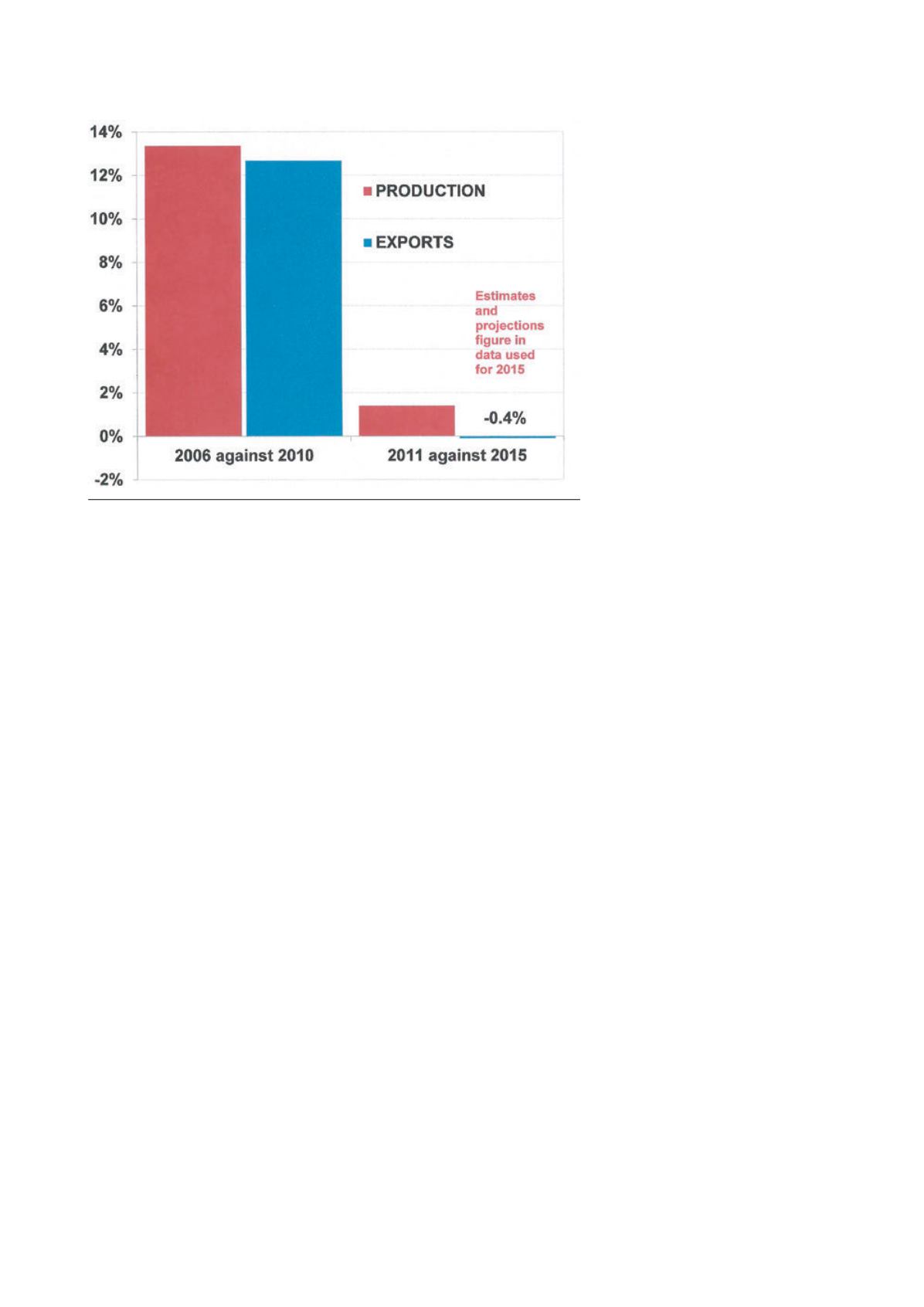
Colombia: growth in coal production and exports.
14
|
World Coal
|
December 2015


