incline screen, by the water distribution
box. With the design of Tabor’s
distribution box, the aim is to use the
entire feed end of the screen by having
the material hit the screening media as
soon as possible. The configuration of
the deck frame is such that the feed
section is at a 45˚ downhill slope to
horizontal, while the main deck is sitting
5˚ above horizontal. The 2 ft feed section
mimics the ‘cutting’ action of a sieve or
flume and removes a portion of the
water. The combination of the feed end
section and the area where the main
deck transitions to the uphill slope
generates the majority of the gross
dewatering. In this area, the pool of
slurry starts to form a cake, while a
portion of the water flows back through
the feed section.
The final dewatering is performed on
the main deck as the cake of material
moves up the slope toward the
discharge end. As the slurry starts to
migrate up the main deck, the material
forms a cake or bed of material, which
captures up to 60% of the fines that are
smaller than the screen media opening.
By retaining a high percentage of the
fines, the amount of material reporting
to the thickener is reduced.
The caking action of the Tabor reverse
incline screen helps to facilitate
additional dewatering by the
combination of G force and capillary
attraction. As the slurry begins to form
into the cake and the material migrates
up the main deck, the force of the screen
and gravity drives the water through the
screen cloth openings. As the water
travels through the cake, it attracts
additional water droplets that are close
through the effect of capillary attraction.
Using this theory, Tabor reverse incline
screens are designed to not break the
cake of material until it goes over the
discharge end cross dam; once the cake
is broken, the effect of capillary
attraction is lost. The effluent that goes
through the dewatering screen media is
then returned back to the system and
possibly used for wash water on the
drain and rinse screens.
Conclusion
Among the variety of dewatering
techniques discussed in this article, the
centrifuge offers the highest amount of
water removal followed by the
high‑frequency screen. While the
high‑frequency screen is not the
dominant choice, it is a cost‑effective
device for certain applications. This is
especially true when the surface
moisture is allowed to be a little higher
and the product is highly abrasive, such
as with refuse in a coal operation.
There are many other industries that
use high-frequency dewatering screens
to either meet customer specifications,
or to reduce the amount of natural
drying time, such as the sand industry.
If the proper equipment is used for
the application, the end result will be
a product that suits the customer’s
needs.
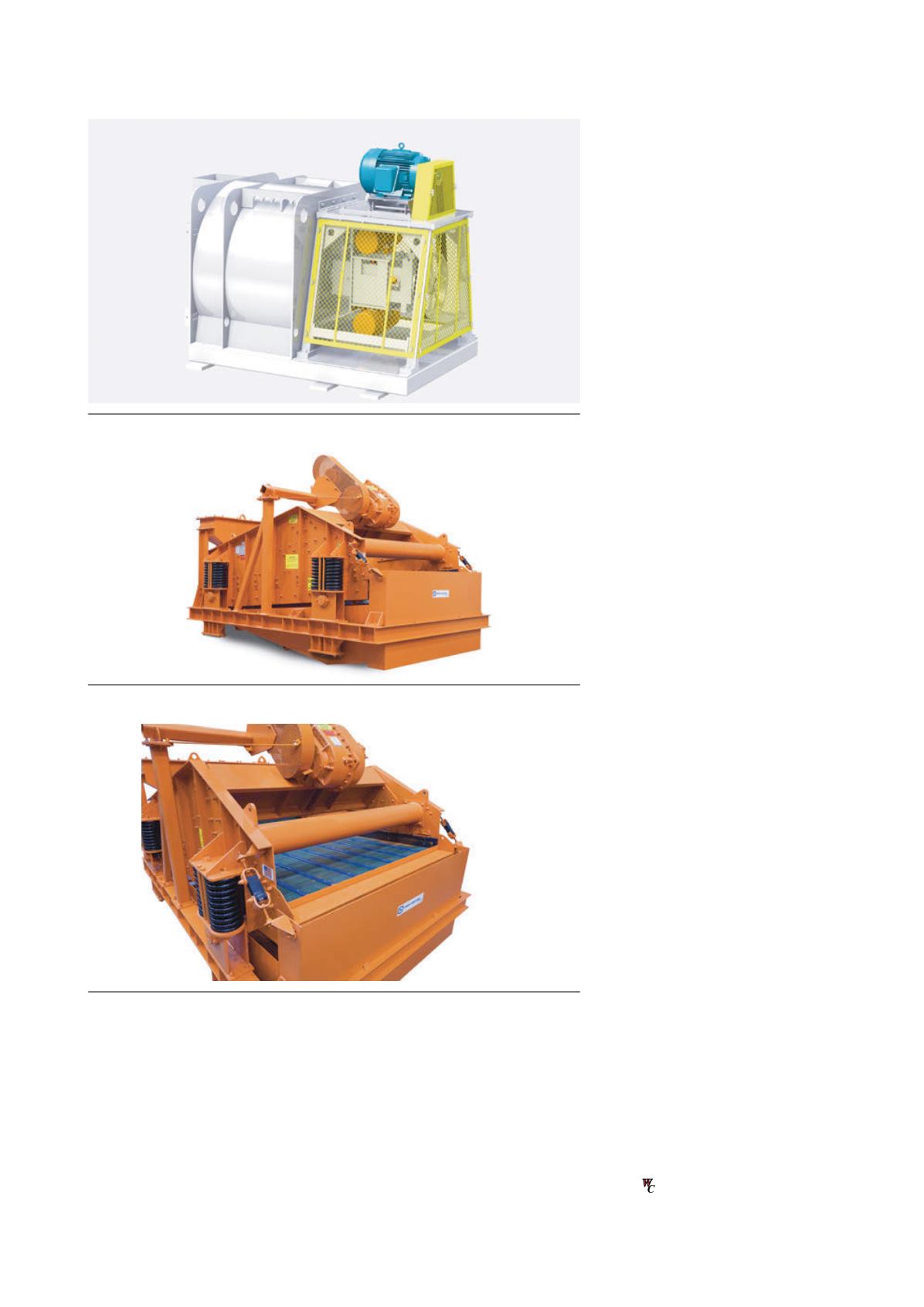
Full view of Tabor high-frequency screen.
Close up of Tabor high-frequency screen discharge end.
CMI horizontal vibratory centrifuge.
42
|
World Coal
|
December 2015


